





Photography professionals and enthusiasts require powerful computers capable of handling large image files, complex editing workflows, and color-accurate displays. The 2026 MacBook lineup offers exceptional capabilities for photographers, combining processing power, display quality, and portability. This guide explores the best MacBooks for photographers, considering performance, display technology, storage options, and software compatibility.
Why MacBooks Excel for Photography
MacBooks have long been the preferred choice for photographers due to their superior display technology, powerful processors, and seamless integration with photography software. The 2026 M-series MacBooks offer significant performance improvements over previous generations, enabling faster image processing and smoother editing workflows. The Liquid Retina XDR display provides exceptional color accuracy and brightness, essential for professional photo editing. Unified memory architecture reduces data transfer bottlenecks, enabling faster image processing. macOS’s stability and reliability make it ideal for mission-critical photography workflows.
MacBook Pro 16-inch M3 Max – The Professional Standard
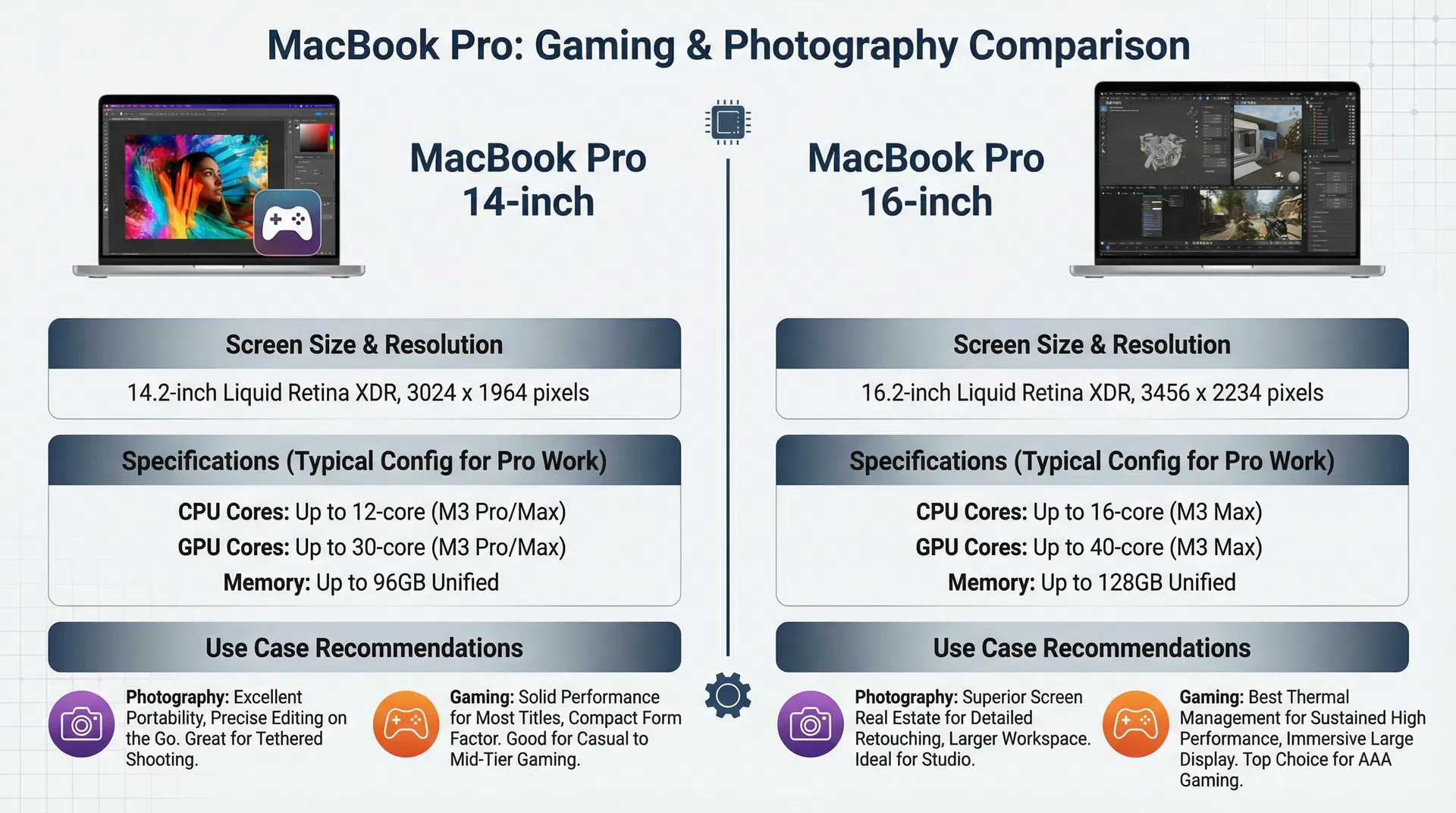
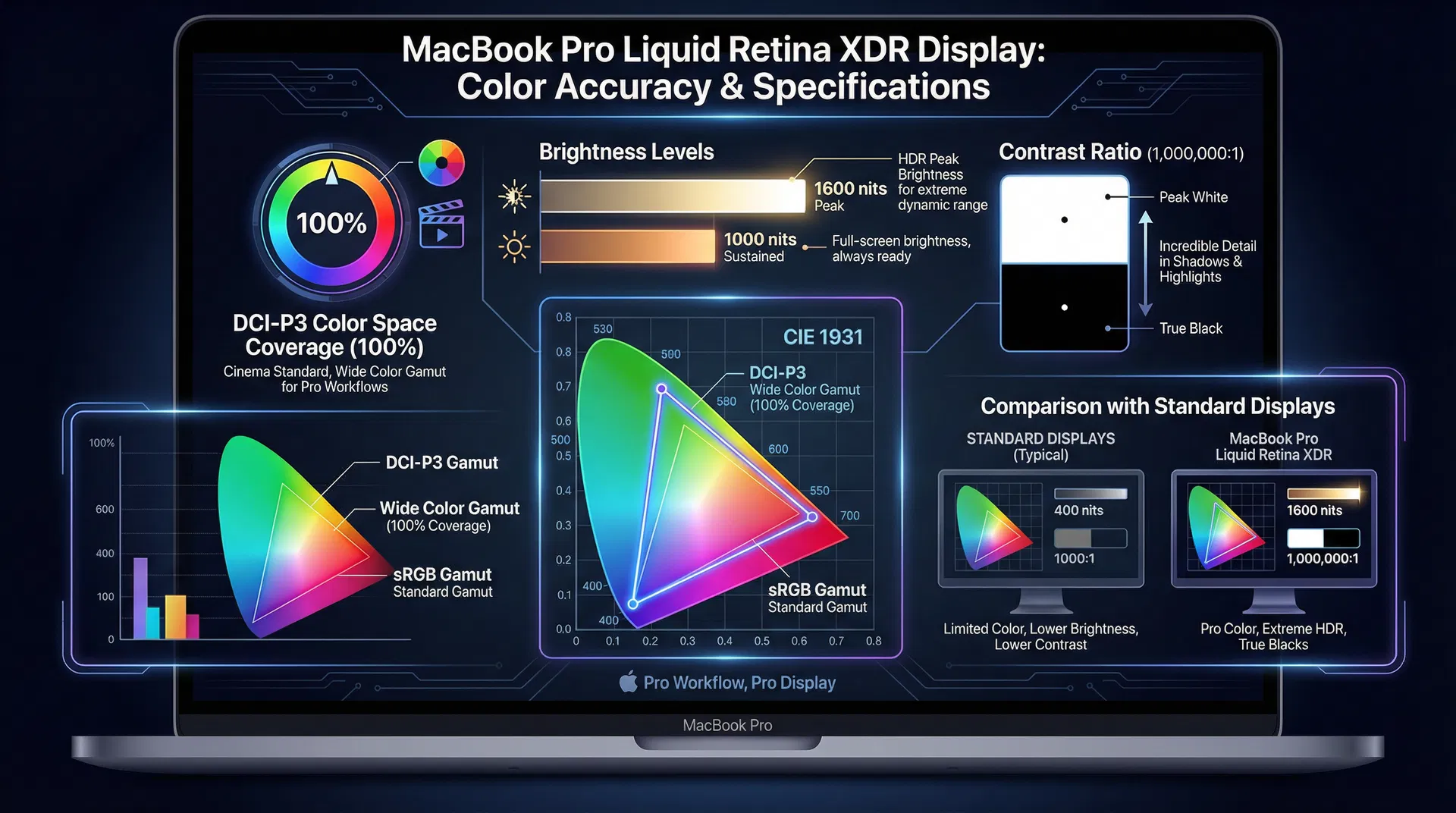
The 16-inch MacBook Pro with M3 Max stands as the best choice for professional photographers. The M3 Max’s 12-core CPU handles complex image processing tasks efficiently. The 18-core GPU accelerates rendering and export operations, significantly reducing processing time. The 16-inch Liquid Retina XDR display offers exceptional color accuracy with 1,000 nits sustained brightness and 1,600 nits peak brightness. The wide color gamut (DCI-P3) ensures accurate color reproduction for professional work. With up to 36GB unified memory, photographers can work with multiple high-resolution images simultaneously without performance degradation.
MacBook Pro 14-inch M3 Pro – The Portable Alternative
The 14-inch MacBook Pro with M3 Pro provides excellent performance for photographers who prioritize portability. The M3 Pro’s 12-core CPU and 18-core GPU deliver solid performance for most photography workflows. The 14-inch Liquid Retina XDR display, while smaller than the 16-inch model, still provides exceptional color accuracy and brightness. The lighter weight and compact form factor make it ideal for photographers who work on location or travel frequently. Consider this option if portability is a priority and you don’t require the absolute maximum performance.
Display Quality and Color Accuracy
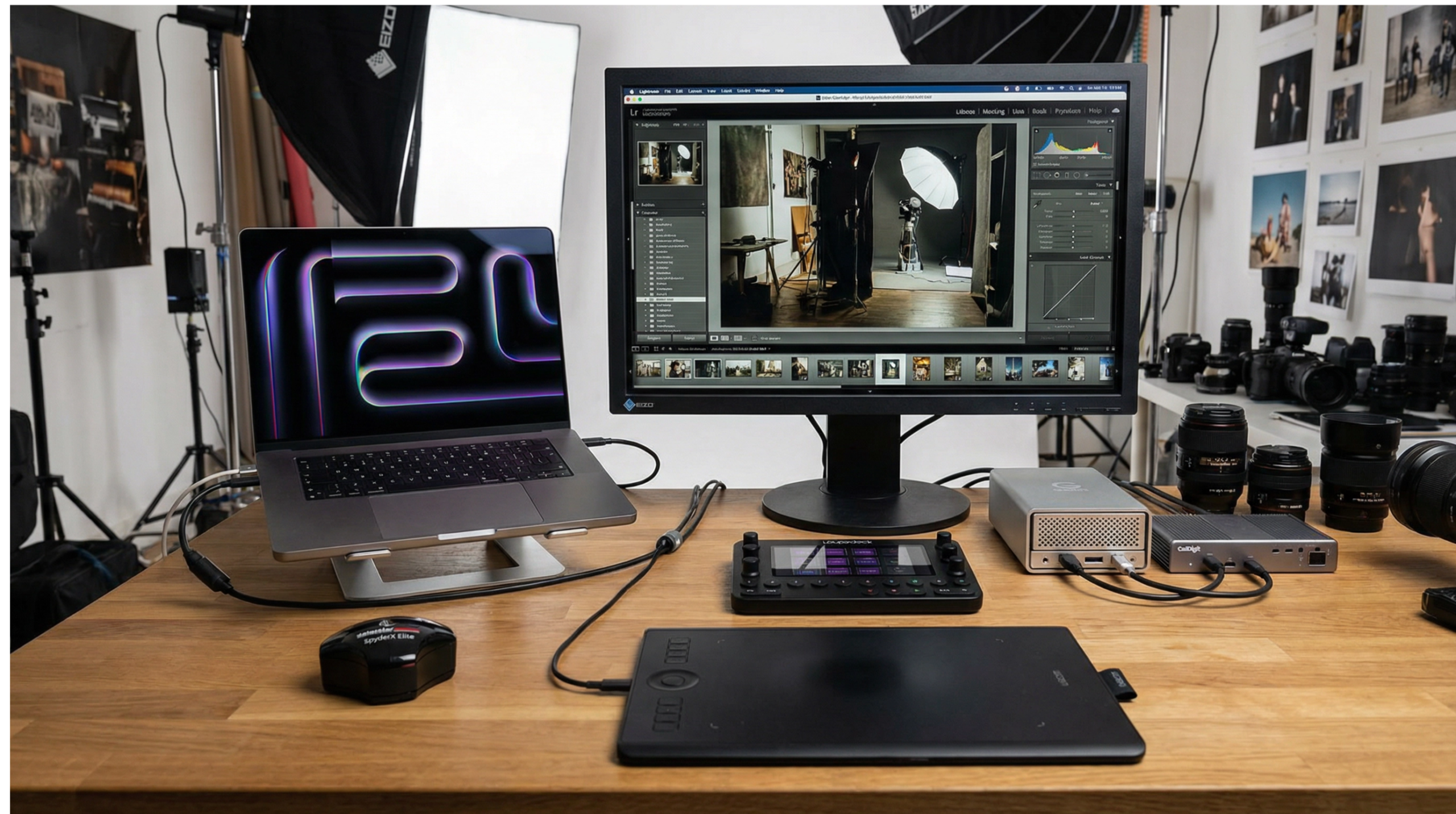
The Liquid Retina XDR display is crucial for professional photography work. The display covers 100% of the DCI-P3 color space, ensuring accurate color reproduction. Factory calibration ensures color accuracy out of the box, though professional photographers may still use external colorimeters for critical work. The 1,000 nits sustained brightness allows comfortable editing in bright environments without glare. The high contrast ratio (1,000,000:1) enables precise tonal adjustments. ProMotion 120Hz refresh rate provides smooth scrolling and responsive editing tools. The display’s quality justifies the MacBook’s premium price for professional photographers.
Processing Power for Image Editing
The M3 Max’s processing power significantly accelerates photography workflows. Adobe Lightroom and Photoshop benefit from the powerful CPU and GPU, enabling faster rendering and export. Batch processing large image libraries completes in significantly less time compared to previous generations. RAW image processing, particularly with high-resolution files from modern cameras, runs smoothly without lag. Video editing for photographers creating video content also benefits from the M3 Max’s performance. Consider the M3 Max essential for professional photographers working with large image libraries or complex editing tasks.
Storage Options and Workflow
The 2026 MacBook Pro supports up to 8TB of internal SSD storage, providing ample space for large image libraries. Fast SSD speeds enable quick access to large RAW files and project libraries. Consider storage capacity based on your photography volume—professional photographers often require 2TB or more. External storage solutions using Thunderbolt 4 provide additional capacity for archival and backup. Organize your storage strategy to balance performance and capacity needs.
Software Compatibility and Ecosystem
macOS offers excellent software options for photographers. Adobe Creative Suite (Lightroom, Photoshop) runs natively on Apple silicon with excellent performance. Capture One Pro provides professional RAW processing with advanced color grading tools. DaVinci Resolve offers professional color grading for photographers working with video. Apple’s native Photos app provides basic editing capabilities and excellent library management. The extensive software ecosystem ensures photographers have powerful tools available.
Connectivity for Photography Workflows
Thunderbolt 4 ports enable fast data transfer from external drives and cameras. USB-C compatibility supports various photography peripherals. SD card readers (available on some models) provide direct camera card access. Wireless connectivity enables tethered shooting with compatible cameras. Consider your connectivity needs when choosing a MacBook model, particularly if you frequently transfer large files or use tethered shooting.
Color Calibration and Profiling
While MacBook displays are factory calibrated, professional photographers often use external colorimeters for precise calibration. Tools like X-Rite i1Display Pro enable creating custom color profiles for your specific lighting conditions. Regular calibration ensures consistent color accuracy across editing sessions. Calibration is particularly important for photographers delivering prints or working with clients who require color consistency.
Battery Life for Location Photography
MacBook battery life during photography work depends on task intensity. Editing sessions typically provide 6-8 hours of battery life, sufficient for full workdays. Tethered shooting and video editing reduce battery life more significantly. For location photography, consider bringing a portable charger or working near power sources. Battery life is less critical for studio photographers working at fixed locations.
Conclusion
The 2026 MacBook Pro lineup offers exceptional capabilities for photographers. The 16-inch M3 Max provides the best overall performance and display quality for professional work, while the 14-inch M3 Pro offers excellent portability. The Liquid Retina XDR display ensures accurate color reproduction, crucial for professional photography. Powerful processors accelerate editing workflows and reduce processing time. While expensive, the MacBook’s capabilities and reliability make it an excellent investment for serious photographers. Choose based on your specific workflow requirements, portability needs, and budget constraints.