






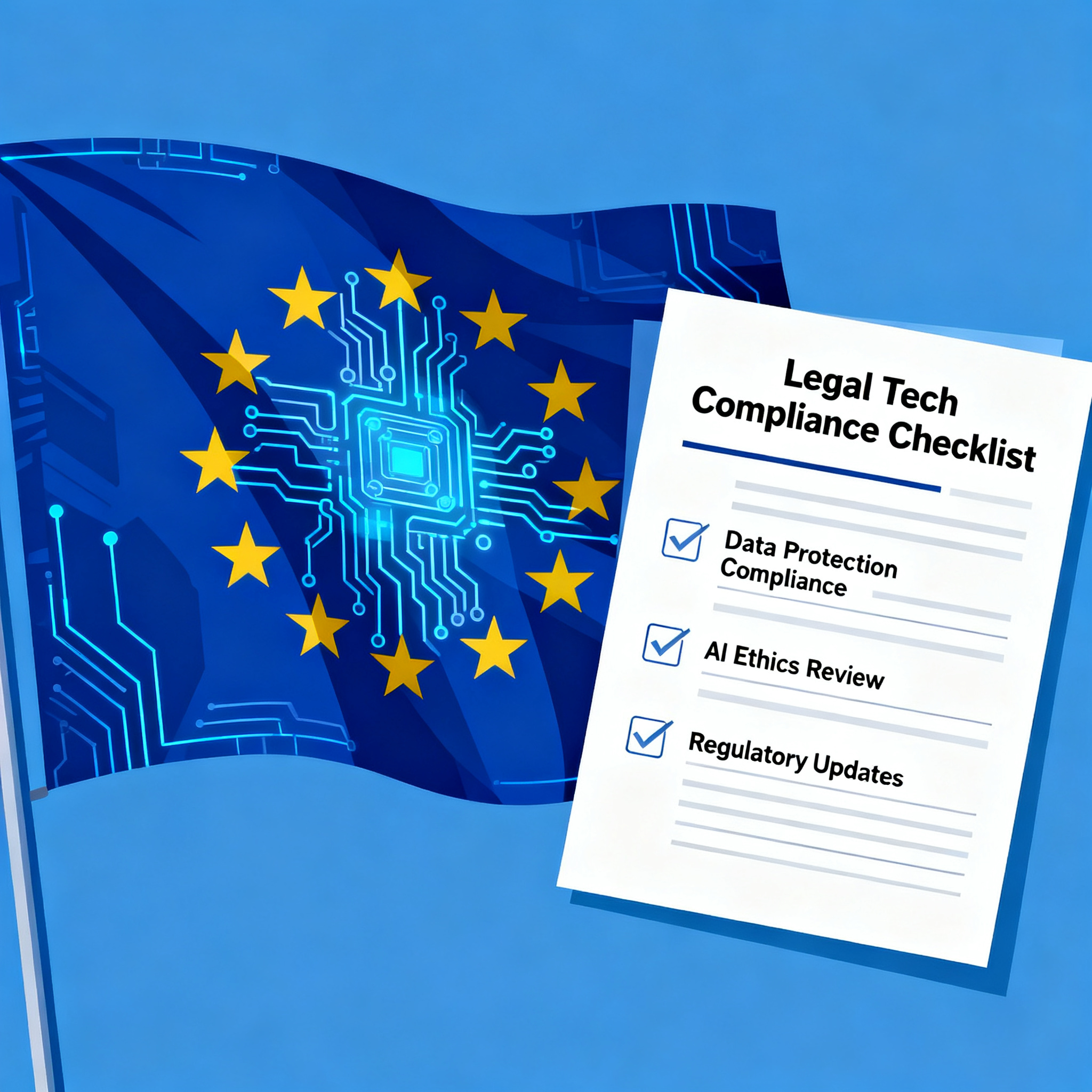
The EU AI Act is the world’s most comprehensive AI regulation, with major enforcement deadlines approaching in August 2026. While many companies still treat AI governance as a future issue, regulators are already moving toward active enforcement for high-risk systems.
For AI teams, legal departments, and enterprise leaders, the challenge is no longer understanding the regulation at a high level. The real challenge is operational readiness.
This practical EU AI Act compliance checklist explains how companies can prepare for high-risk AI obligations before enforcement begins.
Understanding EU AI Act Risk Classification
Before starting compliance work, companies must correctly classify their AI systems under the EU AI Act’s four risk categories.
Unacceptable Risk
These AI systems are prohibited entirely, including:
- Social scoring systems
- Manipulative AI causing harm
- Certain forms of real-time biometric surveillance
High Risk
High-risk systems face the strictest obligations and include AI used in:
- Biometrics and identity verification
- Critical infrastructure
- Education and exams
- Employment and recruitment
- Essential public or private services
- Law enforcement
- Migration and border control
- Judicial systems
Limited Risk
These systems mainly require transparency obligations, such as:
- AI chatbots disclosing users are interacting with AI
- AI-generated content disclosures
Minimal Risk
Most everyday AI applications fall into this category, including:
- Spam filters
- Productivity assistants
- Recommendation systems
Why Risk Classification Is Harder Than Companies Expect
One of the biggest mistakes organizations make is assuming internal AI tools are automatically exempt.
For example:
- Resume screening AI tools may qualify as high-risk employment systems
- AI systems ranking loan applicants may fall under essential services
- Biometric attendance systems may trigger strict obligations
In practice, many organizations underestimate how broadly “high-risk AI” can apply.
8-Step EU AI Act Compliance Checklist
Step 1: Build a Complete AI System Inventory
Start by identifying every AI system used internally or externally.
This includes:
- Third-party AI vendors
- Internal machine learning tools
- Customer-facing AI systems
- Embedded AI features in enterprise software
For each system, document:
- Purpose
- Users
- Data inputs
- Outputs
- Risk classification
- Geographic deployment
Without a complete inventory, compliance becomes nearly impossible.
Step 2: Identify Your Role Under the EU AI Act
The Act creates different obligations depending on whether your company is acting as:
- Provider
- Deployer
- Importer
- Distributor
A company may hold multiple roles simultaneously.
For example:
- Building an AI model internally may make you a provider
- Using a third-party HR AI tool may make you a deployer
Understanding your legal role determines which obligations apply.
Step 3: Establish a Continuous Risk Management System
EU AI Act compliance is not a one-time audit.
Organizations must:
- Identify foreseeable risks
- Evaluate harm scenarios
- Monitor system performance continuously
- Update controls throughout the AI lifecycle
Risk management should continue from:
- Development
- Deployment
- Monitoring
- Post-market operation
Companies treating compliance as a static checklist will likely struggle during audits.
Step 4: Strengthen Data Governance and Bias Controls
Training, validation, and testing datasets must meet strict governance requirements.
Organizations should:
- Review data quality
- Detect bias risks
- Document preprocessing methods
- Track data lineage
- Validate dataset relevance
For high-risk AI systems, poor documentation around training data may become one of the largest compliance gaps.
Step 5: Prepare Technical Documentation Early
Technical documentation is one of the most underestimated requirements in the EU AI Act.
Required documentation may include:
- Intended purpose
- System architecture
- Model limitations
- Training methodology
- Performance metrics
- Risk assessment outcomes
- Human oversight procedures
- Cybersecurity safeguards
Many companies discover too late that their AI systems were never designed with audit-ready documentation.
Step 6: Implement Transparency Requirements
The EU AI Act places strong emphasis on transparency and explainability.
Organizations may need to:
- Inform users they are interacting with AI
- Label AI-generated or manipulated content
- Explain system capabilities and limitations
- Enable humans to interpret outputs properly
Transparency is especially important for customer-facing systems.
Step 7: Improve Accuracy, Security, and Resilience
High-risk AI systems must achieve appropriate levels of:
- Accuracy
- Robustness
- Reliability
- Cybersecurity protection
Organizations should also prepare for:
- Adversarial attacks
- Unauthorized access
- Model failures
- Data corruption
- System interruptions
Cybersecurity and AI governance are increasingly converging under the EU AI Act framework.
Step 8: Ensure Effective Human Oversight
Human oversight is one of the most important compliance requirements.
Organizations must ensure humans can:
- Override AI decisions
- Interrupt system operations
- Review outputs effectively
- Escalate problematic outcomes
Effective oversight requires more than simply adding a “human in the loop” label.
Teams must demonstrate:
- Reviewer authority
- Staff competence
- Operational procedures
- Escalation workflows
Common EU AI Act Compliance Mistakes
Many companies are still underestimating the operational impact of the regulation.
Common mistakes include:
- Treating AI governance as a legal-only issue
- Ignoring third-party AI vendor risks
- Assuming internal tools are exempt
- Delaying documentation until audits begin
- Failing to define human oversight processes
- Misclassifying high-risk systems
These issues often become visible only after internal compliance reviews begin.
Key EU AI Act Deadlines
February 2025
Prohibited AI practices become banned.
August 2026
High-risk AI system obligations begin applying.
August 2027
General-purpose AI model obligations take effect.
Organizations waiting until enforcement deadlines arrive may struggle to implement governance processes in time.
Why the EU AI Act Matters Beyond Europe
Even companies outside the EU are preparing for compliance.
Many global organizations are choosing to:
- Apply EU AI standards worldwide
- Avoid separate regional governance systems
- Reduce regulatory fragmentation
- Build trust with enterprise customers
The EU AI Act is increasingly shaping global AI governance expectations, much like GDPR influenced global privacy standards.
Our Take: The Biggest Compliance Challenge
The hardest part of EU AI Act compliance is not documentation alone.
The real challenge is operationalizing governance across:
- Legal teams
- AI engineers
- Security teams
- Product managers
- Executive leadership
In practice, proving meaningful human oversight and maintaining continuous risk management will likely become the biggest compliance burden for most organizations.
Companies that begin building governance systems early will have a significant advantage before enforcement expands in 2026.
Frequently Asked Questions
What is considered a high-risk AI system under the EU AI Act?
High-risk AI systems include AI used in employment, education, biometrics, critical infrastructure, essential services, law enforcement, migration, and judicial systems.
Does the EU AI Act apply to companies outside Europe?
Yes. The regulation can apply to organizations outside the EU if their AI systems affect individuals within the European Union.
Are internal AI tools exempt from the EU AI Act?
Not necessarily. Internal systems used for hiring, employee monitoring, or decision-making may still qualify as high-risk AI systems.
When does the EU AI Act take effect?
Different obligations apply at different stages, with major high-risk AI system enforcement beginning in August 2026.
Final Thoughts
The EU AI Act is not simply another compliance framework. It represents a structural shift in how organizations design, deploy, monitor, and govern AI systems.
Companies that treat compliance as a strategic operational capability — rather than a legal checkbox — will be far better positioned as AI regulation expands globally.
Related: AI Agent Problems and Failures 2026