




The enterprise AI landscape in 2026 presents two distinct paradigms: individual AI agents and agentic AI organizations. Understanding the difference is crucial for making strategic AI deployment decisions.
What Is an AI Agent?
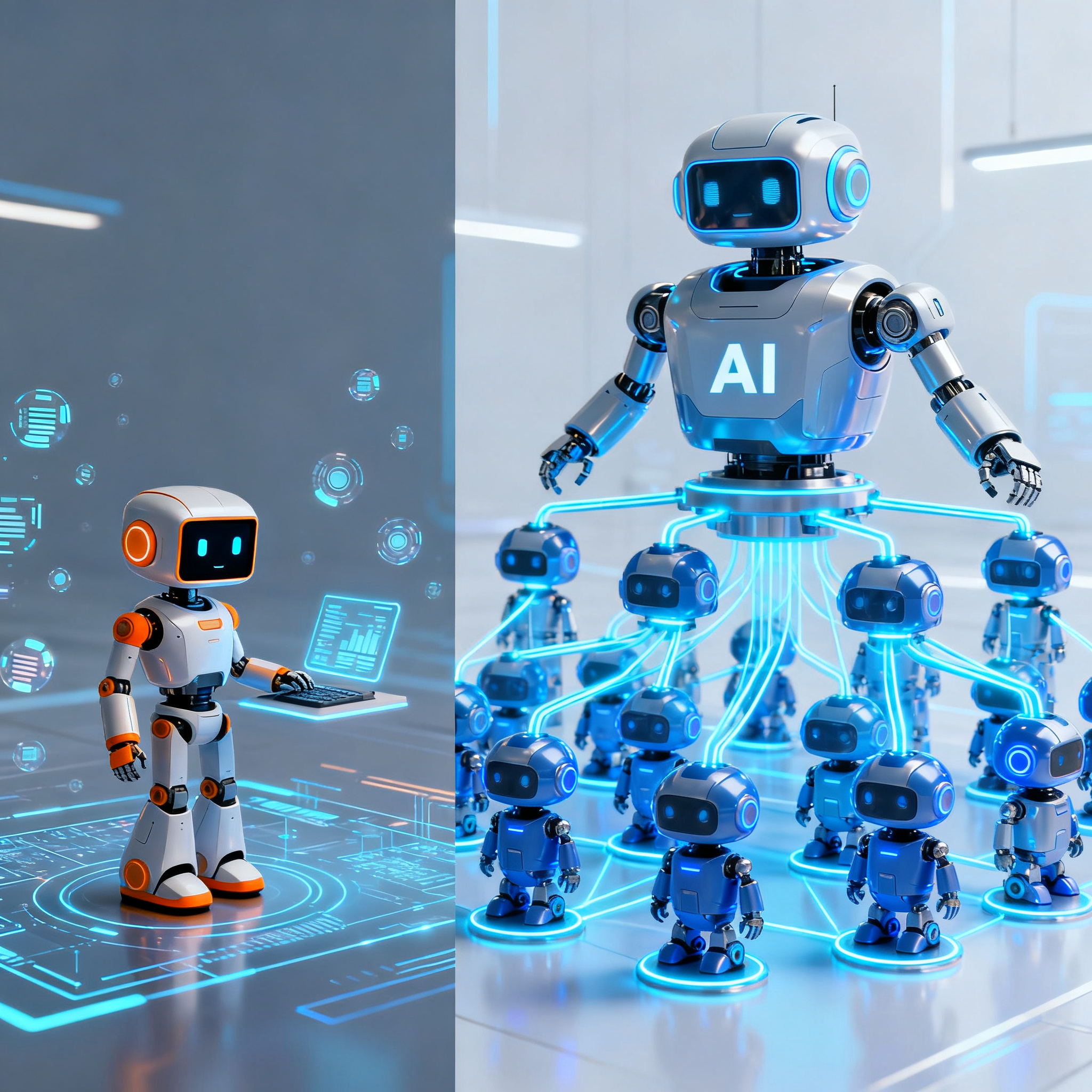
An AI agent is an individual software component that perceives inputs and executes a defined task. You give it an objective, and it plans, reasons, and executes a sequence of actions using tools and data sources without human steering at each step.
What Is an Agentic AI Organization?
Agentic AI is a system that deploys, orchestrates, and governs multiple agents working together toward a complex goal. An agentic enterprise uses these coordinated systems to automate end-to-end processes that reason, plan, and adapt.
AI Agent vs AI Organization: Key Differences
Task Execution
- AI Agent: Single-task execution, discrete goals
- AI Organization: Multi-agent orchestration, complex workflows
Autonomy Level
- AI Agent: Moderate autonomy, defined boundaries
- AI Organization: High autonomy with governance frameworks
Business Impact
Research shows a significant productivity gap:
- AI Copilots deliver 5-10% organizational improvement
- AI Agents deliver 20-50% efficiency gains (4-5x multiplier)
- Only 5% of Fortune 500 companies have fully scaled AI agents
When to Deploy AI Agents
Deploy agents for well-defined, cross-system workflows:
- Automated data entry across systems
- Customer support ticket routing
- Invoice processing and approval
- Inventory management
When to Build Agentic AI Organizations
Build toward agentic AI for end-to-end process automation:
- Customer journey automation across touchpoints
- Supply chain optimization
- Financial close and reporting
- HR lifecycle management
The Hybrid Approach
Enterprises need both: agents for task execution, agentic AI for end-to-end process automation. The right starting point depends on the workflow, not a universal sequence.
Risk Considerations
Traditional AI risks include predictive errors. Autonomous action risks in agentic systems are different—once an AI agent makes a decision and acts, consequences ripple across interconnected systems.
The choice between AI agent vs AI organization is a capability-matching exercise. Understanding your workflow requirements and risk tolerance will guide the right path forward.